

Guide to Selling Antique or Inherited Jewelry
Transforming Emotional Value into a Conscious Decision
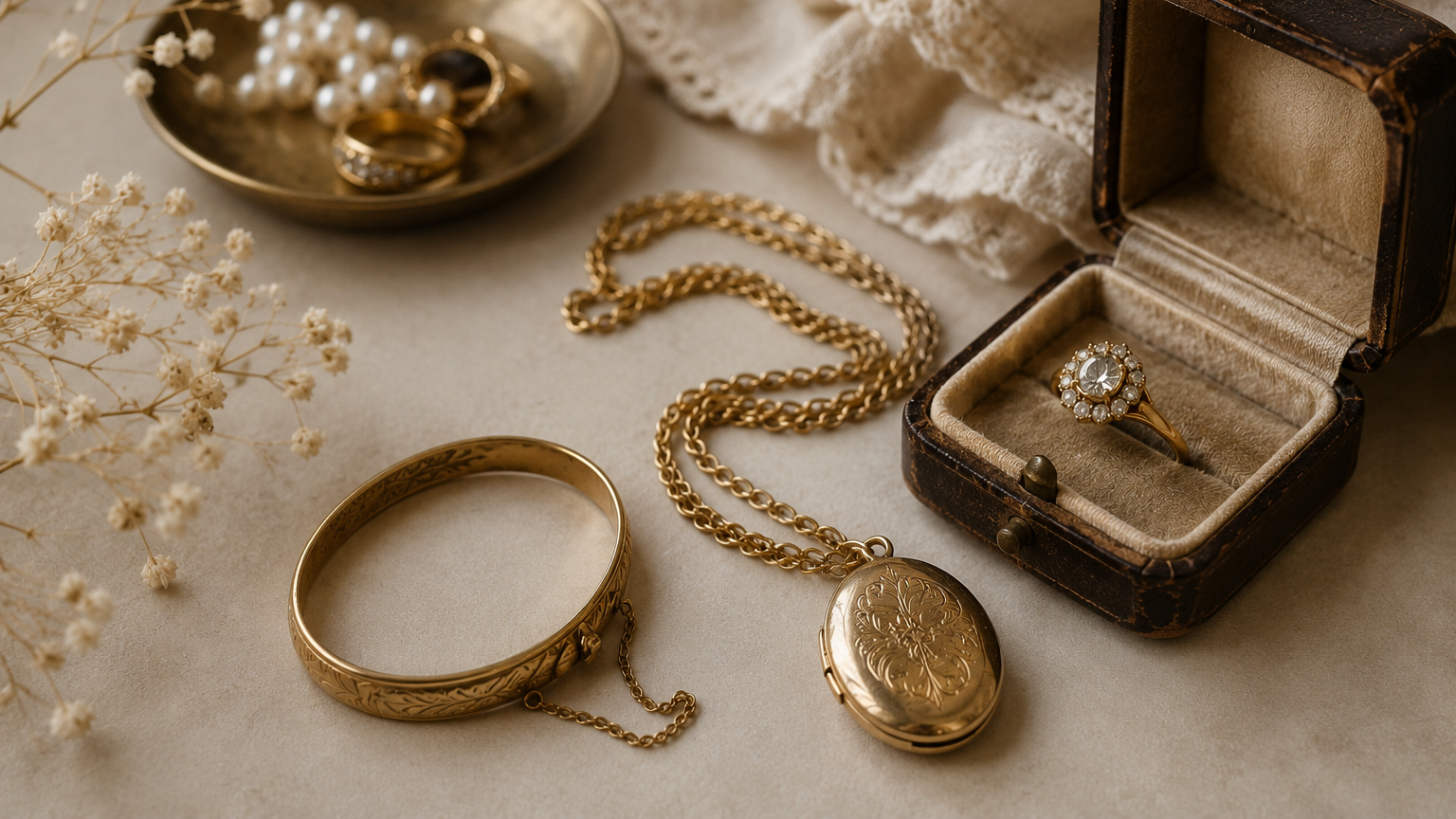
Some objects are inherited not just for their material value, but for what they represent. A ring passed down through generations, a necklace that accompanied important moments, a bracelet no longer worn but still holding history.
However, a point comes when many people ask themselves the same question: What do I do with this jewelry?
Selling antique or inherited jewelry is not simply a transaction. It's a process that combines memory, valuation, and decision-making. This guide aims to accompany you on that journey, with clarity and without losing sight of what's important: the real value of what you hold in your hands.
1. Understand what you really have
Before deciding to sell, it's key to know what type of piece you possess. Not all jewelry has the same market value.
You might encounter:
- Solid gold (18k, 14k, etc.)
- Jewelry with precious or semi-precious stones
- Plated pieces (which have a layer of gold, but are not solid gold)
- Antique designs with aesthetic or collectible value
Often, emotional value leads us to overestimate or underestimate a piece. Therefore, a professional appraisal is the first step.
2. The value of gold is not the value of the jewelry
One of the most important — and least known — points is that the value of antique jewelry is not always in its design, but in its material.
Gold, for example, is valued according to its purity and weight. In contrast, a piece of jewelry might have a beautiful design but no resale value if it's not solid gold or if it's very worn.
Separating the emotional from the real value helps make clearer decisions.
3. When it makes sense to sell
There isn't one single valid reason. Some common situations include:
- Inherited jewelry that is not used
- Broken or incomplete pieces
- Need for liquidity
- Change in personal style
- Reorganization of family assets
Selling doesn't mean "letting go of the memory," but rather transforming an object into a new possibility.
4. The sales process: what to expect
A serious jewelry buying process should be transparent and simple:
- Appraisal of the pieces
- Determination of metal type and purity
- Accurate weighing
- Quotation based on market value
- Free decision to sell or not
Clarity at each step is key to building trust.
5. Avoid common mistakes
When selling antique jewelry, it's important to avoid:
- Selling without comparing values
- Accepting offers without price explanation
- Not verifying the authenticity of the gold
- Being swayed solely by emotion or urgency
An informed decision is always a better decision.
6. Choosing where to sell
Not all places offer the same level of transparency or specialization. It's advisable to choose places that offer clear appraisal, personalized attention, and pricing based on the current gold market.
In Uruguay, La Fontaine specializes in buying gold and jewelry, offering a professional appraisal process and support at every stage. The idea is not to rush the decision, but to provide information so that the client can choose with confidence.
7. Close one chapter, open another
Selling an inherited piece of jewelry doesn't erase its history. Often, it simply transforms it.
That value can be turned into a trip, a project, savings, or a new piece that represents another stage of your life.
Because in the end, true luxury isn't in accumulating, but in knowing what to keep... and what to transform.
